
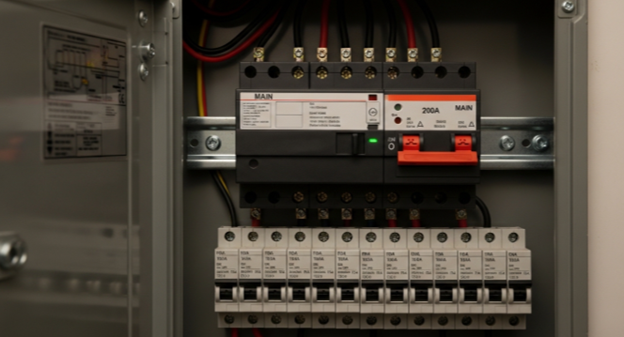
Knowing where is the main circuit breaker located in your home is essential for safety, emergency power shutdowns, and protecting your appliances. Many homeowners overlook this critical component until a power surge, electrical issue, or emergency forces them to act. In this expert guide, written from the perspective of a licensed electrician, we’ll cover exact locations, identification methods, safety procedures, and best practices to ensure you never scramble during a blackout or hazard.
Short Answer — Where Is the Main Circuit Breaker Located?
The main circuit breaker is usually found in the basement, garage, utility room, or exterior panels depending on your home type and local electrical code. AB Electric Wiring explains that it serves as the master switch for your entire home, allowing you to cut off all electricity in emergencies.
Safety Note: Never attempt to access your main breaker panel without proper precautions. Always wear insulated gloves, ensure tools are dry, and avoid touching live wires.
Where Is the Main Circuit Breaker Located in Different Types of Homes?
- Single-story vs multi-story houses: Typically in the garage, basement, or utility room. Multi-story homes may also have subpanels upstairs.
- Apartments and condos: Usually in a utility closet or hallway panel, often locked and requiring landlord access.
- Older homes with fused panels: Found in basements or closets, sometimes labeled as “fused disconnects” rather than modern breakers.
- Mobile homes / modular housing: Exterior wall-mounted panels are common; weatherproof enclosures are standard.
Understanding the Main Circuit Breaker — Expert Electrician Insights
The main circuit breaker is the central point of electrical control in a home. Its purpose is to:
- Cut off all electricity in emergencies.
- Protect the home from overloads or short circuits.
- Provide a starting point for troubleshooting electrical issues.
How It Differs From Branch Breakers
- Branch breakers control individual circuits.
- The main breaker controls the total power supply.
- Homeowners often confuse the largest breaker with branch circuits, which can lead to improper handling.
How to Identify the Main Circuit Breaker in Your Panel
- Physical size: Main breakers are usually larger than branch breakers.
- Labeling clues: Often marked as “MAIN” or with a high amperage rating (100–200A).
- Panel placement: Usually at the top or bottom of the panel, depending on manufacturer.
- Visual cues electricians use: Consistent wiring paths and thicker bus bars connected to the main breaker.
Factors That Affect Main Circuit Breaker Location
- Home age and electrical code: Older homes may have non-standard panel locations.
- Panel type: Fused panels, traditional breakers, or modern smart panels have different layouts.
- Interior vs exterior placement: Code may allow outdoor panels if weatherproof.
- Accessibility: Must comply with safety and clearance regulations for emergency access.
Hidden Panel Locations That Homeowners Often Miss
- Behind doors, utility cabinets, or closets
- Attic or crawlspace installations
- Garage wall-mounted panels
- Outdoor weatherproof panels
How To Safely Locate Your Main Circuit Breaker
Immediate Safety Guidelines
- Wear insulated gloves and safety goggles.
- Ensure hands and tools are dry.
- Avoid touching exposed wires or metal surfaces inside the panel.
Step-by-Step Process
- Check common locations: garage, basement, utility room.
- Identify the largest breaker or switch in the panel.
- Confirm labeling: “Main” or amperage rating (usually 100–200A).
- Verify by turning off the main breaker briefly to ensure power is cut safely.
Professional Electrician Methods
- Thermal camera inspection for detecting active circuits.
- Load testing to ensure circuits aren’t overloaded.
- Differentiating main vs subpanels in homes with complex wiring.
Main Circuit Breaker Locations by Home Type
| Home Type | Typical Location | Accessibility | Safety Considerations | Notes |
| Single-story house | Garage or utility room | Easy | Standard safety precautions | Usually near meter |
| Multi-story house | Basement or side wall | Moderate | Ensure clear path | May have subpanels upstairs |
| Apartment / Condo | Utility closet or hallway panel | Moderate | Often locked | Requires landlord permission |
| Mobile / Modular home | Exterior wall panel | Moderate | Weatherproof access | Check local codes |
| Older homes | Fused panel in basement/closet | Hard | Extra caution | May require breaker upgrade |
Health, Safety, and Risk Considerations
- Electrical shock hazards: Direct contact with live components is dangerous.
- Fire risk: Faulty or outdated panels can ignite.
- Panel accessibility: Must be unobstructed for emergencies.
- Precautions for children and pets: Keep panels locked or secured.
Cost & Upgrade Scenarios
- Panel inspection: Licensed electrician checks for corrosion, loose connections, and code compliance.
- Main breaker replacement: Costs vary by amperage and panel type.
- Panel relocation: Sometimes needed for better accessibility or code compliance.
- Upgrade from fuse box to modern breaker panel: Enhances safety and capacity.
- Safety checks: Included in home inspections to prevent hazards.
Prevention — Ensuring You Always Know Your Main Circuit Breaker Location
Homeowner Best Practices
- Label all breakers clearly.
- Maintain an updated electrical panel map.
- Conduct routine inspections for corrosion or wear.
- Educate family members on emergency power cutoff procedures.
Pro Electrician Safety Checklist
- Call a licensed electrician for any doubt or repeated tripping.
- Avoid DIY panel modifications to prevent shocks or code violations.
- Ensure insurance and local code compliance for all electrical work.
- Real-life examples: Proper identification of the main breaker has prevented appliance damage and fire hazards.
People Also Ask
Where is the main circuit breaker located in my house?
How do I find the main breaker in an apartment?
Can the main breaker be outside the home?
What does the main breaker look like?
How do I know if I’m looking at the main or subpanel?
Is it safe to touch the main breaker?
Can I turn off the main breaker during an emergency?
How do electricians identify hidden main breakers?
FAQs — Where Is the Main Circuit Breaker Located?
Where is the main circuit breaker located in older homes?
Usually in basements, closets, or behind fuse boxes; may look different from modern panels.
Can the main breaker be in a closet or attic?
Yes, some homes place panels in less obvious spots; safety clearance must be maintained.
How do I identify the main breaker from branch breakers?
The main breaker is the largest, usually labeled “MAIN” with the highest amperage rating.
What should I do if I can’t find the main circuit breaker?
Contact a licensed electrician to locate and verify the panel safely.
Are exterior panels common in modern homes?
Yes, often weatherproofed for outdoor access; check local electrical codes.
Does the main breaker control all subpanels?
Yes, but subpanels have individual branch breakers; the main breaker cuts total power.
How often should the main breaker be inspected?
At least once a year, or during any home inspection or panel upgrade.
Can a main breaker fail and cause hazards?
Yes, failure can lead to electrical overloads, fire risks, and appliance damage.
Conclusion — Finding Your Main Circuit Breaker Safely
Knowing where is the main circuit breaker located is critical for:
- Safety: Immediate power cutoff in emergencies.
- Appliance protection: Prevents damage from surges or overloads.
- Emergency preparedness: Quick access during storms, blackouts, or electrical faults.
Key Takeaways:
- Always identify and label your main breaker clearly.
- Follow safety protocols when locating or operating it.
- Call a licensed electrician for inspection and cost details, hidden panels, or upgrades.
- Long-term planning ensures safety and peace of mind.
By understanding the location and function of your main circuit breaker, homeowners can respond confidently during electrical issues, prevent hazards, and maintain a safe, code-compliant home.