
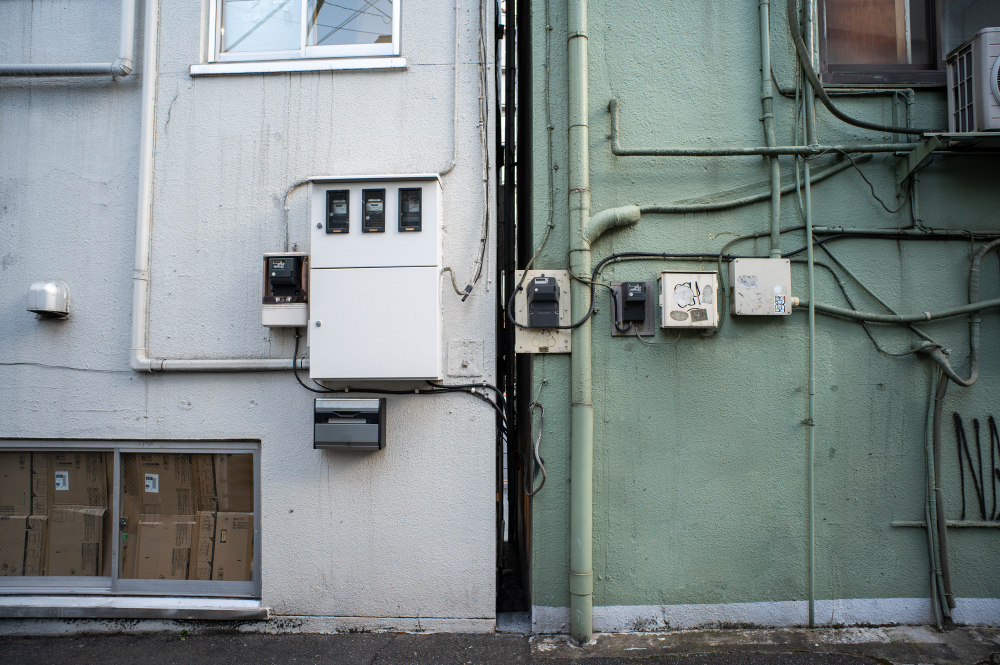
New York City winters are hard on everything. Anyone who has lived here for a few seasons knows that the combination of cold snaps, freezing rain, ice accumulation, and sudden warm spells is rough on infrastructure of all kinds. Outdoor electrical equipment takes that punishment constantly, and outdoor electrical boxes are right in the middle of it.
If the outlets, junction boxes, or enclosures on the exterior of your property were not installed with the right weather ratings, they will eventually fail. And when outdoor electrical equipment fails, the consequences can go well beyond a tripped breaker.
What “Weatherproof” Actually Means
Not all outdoor electrical boxes offer the same level of protection. The system most commonly used to rate enclosures is the NEMA scale, which stands for the National Electrical Manufacturers Association. These ratings describe how well an enclosure holds up against specific environmental conditions.
For outdoor use in a climate like New York City’s, NEMA 3R is generally the minimum you want. That rating covers protection from rain, sleet, and ice formation on the outside of the enclosure. For locations that see more direct exposure, near a hose bib, for example, or on a wall that gets hit by runoff, a NEMA 4 or 4X rating provides a higher level of protection.
In-Use Covers vs. Standard Weatherproof Covers
There is an important distinction between a basic weatherproof outlet cover and what is commonly called an “in-use” or “bubble” cover. A standard weatherproof cover only seals the outlet when nothing is plugged in. The moment a cord is inserted, the cover no longer sits flush and water can get in around the cord.
In-use covers are designed to remain sealed even with a cord inserted. Under current NEC code, in-use covers are required for outdoor outlets in wet locations. In New York City, this applies to any exterior outlet that could be in use during rain or snowmelt.
Why the Freeze-Thaw Cycle Is the Real Problem
The cold itself is not necessarily the biggest issue for outdoor electrical equipment in New York. The freeze-thaw cycle is. Water finds its way into a small gap or crack, it freezes and expands, and when temperatures rise again the gap is larger than it was before. Repeat that process over a full winter season and you end up with cracked housings, failed seals, and corrosion inside the box.
This is why material selection matters. Standard steel enclosures corrode. PVC and fiberglass options hold up significantly better in cold, wet conditions. For outdoor junction boxes and small panels, fiberglass NEMA 3R enclosures are a common choice in the New York City area for exactly this reason.
Conduit Selection Matters Just as Much
The box is only part of the system. The conduit, which is the piping that carries wiring to and from the box, also needs to be rated for outdoor use. Liquid-tight flexible conduit is often used at connection points where the conduit meets a fixture or box, because it maintains a seal even as the conduit shifts slightly from thermal expansion and contraction. Rigid PVC conduit is common for longer outdoor runs.
If conduit is not properly sealed at every connection point, water can travel inside it and reach places you would not expect, including boxes and devices located indoors.
Outdoor Lighting Installations: Where Things Often Go Wrong
Landscape and security lighting systems are among the most frequently installed outdoor electrical setups in New York City, and they are also some of the most commonly done without proper weatherproofing.
Security lighting along the exterior of a building runs year-round through all conditions. The fixtures are usually rated for outdoor use, but the wiring, junction boxes, and outlet connections that support them need to match that rating. A security light on a properly rated fixture that connects back to an underrated junction box is still a problem. The weak point in the system is what eventually fails.
For path lights, accent lights, and similar low-voltage outdoor lighting systems, the wiring is often buried. Buried wiring needs to be rated for direct burial, typically UF-B cable or wiring run through conduit that is rated for underground installation. Standard NM-B cable, the type used for indoor wiring, is not rated for burial and will break down.
Sensors, Timers, & Smart Controls Outdoors
Many outdoor lighting setups now use motion sensors, timers, or smart controllers. Any of these devices installed outside the building need to be rated for outdoor use as well. Motion sensor housings are often wet-rated, but the wiring connections at the sensor require the same weatherproofing attention as the rest of the system. A properly rated sensor with unprotected wire connections at the junction point is not a finished installation.
Matching the Rating to the Location
The NEC divides outdoor electrical locations into two categories: damp locations and wet locations. Damp locations include covered areas like protected patios where moisture is present but direct rain exposure is limited. Wet locations include anywhere subject to direct rainfall, hose spray, or water runoff.
Equipment needs to be rated for the actual conditions it will face. Installing equipment rated for a damp location in a wet location is a code violation, and it is also a setup that will show problems within a season or two.
For properties in New York City, any outdoor electrical work is worth having reviewed by a licensed electrician familiar with the local code. The NYC Electrical Code has requirements that go beyond the NEC in certain areas, and outdoor installations are exactly where those details come into play.
A properly rated outdoor electrical system will hold up through winter after winter without issue. One that was installed without attention to weatherproofing requirements will not, and those failures have a way of becoming expensive to sort out.