
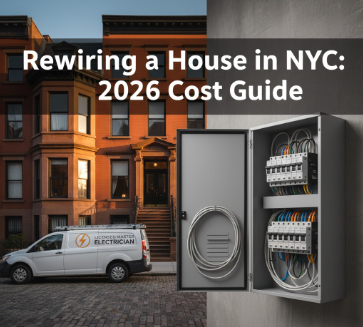
In New York City, the average cost to rewire a house typically ranges from $10,000 to $30,000. For larger luxury homes or complex brownstones, this price can exceed $50,000. While the national average is lower, NYC’s unique architectural landscape such as lath and plaster walls, brick structures, and strict Department of Buildings (DOB) regulations drives costs higher.
Cost Breakdown by Property Size
While every home is different, contractors in NYC often estimate costs based on square footage or the number of bedrooms.
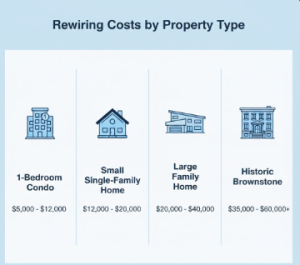
| Property Type | Estimated Cost Range (NYC) |
| 1-2 Bedroom Apartment/Condo | $5,000 – $12,000 |
| Small Single-Family Home (1,500 sq ft) | $12,000 – $20,000 |
| Large Family Home (2,500+ sq ft) | $20,000 – $40,000 |
| Historic Brownstone / Townhouse | $35,000 – $60,000+ |
Factors That Influence the Cost in NYC
- Access and Wall Material
If your electrician has easy access to the wiring (e.g., through an unfinished basement or attic), the cost will be lower. However, many NYC homes have plaster and lath walls or brick/concrete partitions. Cutting into these materials and repairing them afterward adds significant time and labor costs.
- Electrical Panel Upgrade
A full rewire usually requires an upgrade to your electrical panel to handle 200 amps. In NYC, a panel upgrade alone can cost between $2,500 and $5,000, depending on whether the utility company (Con Edison) needs to run a new service line to your home.
- Permitting and Inspections
NYC requires a licensed master electrician to file for a permit with the Department of Buildings (DOB) for any major rewiring project. Permit fees and the time required for administrative filing can add $500 to $1,500 to your total bill.
- Adding Smart Features
If you choose to install smart switches, EV chargers, or integrated home automation during the rewire, your material costs will increase. However, doing this during a rewire is much cheaper than doing it later.
Why Rewiring in NYC is More Expensive
- Labor Rates: NYC has some of the highest labor rates for skilled trades in the world.
- Logistics: Parking, debris removal, and navigating narrow streets in Manhattan or Brooklyn increase the time a contractor spends on-site.
- Complex Codes: NYC has its own specific NYC Electrical Code, which is often stricter than the National Electrical Code (NEC) to account for high-density living.
Warning Signs Your NYC Home Needs Rewiring
If you live in an older NYC building, you should consider a rewire if you notice:
- Frequent Breaker Trips: Your old system can’t handle modern appliances.
- Two-Prong Outlets: A sign that your home lacks a safety ground wire.
- Flickering Lights: Indicates loose or deteriorating connections behind walls.
- Burning Smells: Immediate evidence of melting insulation—a major fire risk.
How to Save Money on Your Rewire
- Combine Projects: Rewire during a kitchen or bathroom renovation when walls are already open.
- Clear the Area: Move furniture and clear out rooms to help the electrician work faster.
- Get Multiple Quotes: Always compare at least three quotes from licensed NYC Master Electricians.
Conclusion
Rewiring your NYC home is a major project, but it is a vital investment in safety, property value, and modern convenience. It eliminates fire hazards and ensures your home can support the technology of today and tomorrow. Always ensure you hire a licensed professional who understands the specific complexities of New York City’s building infrastructure.