
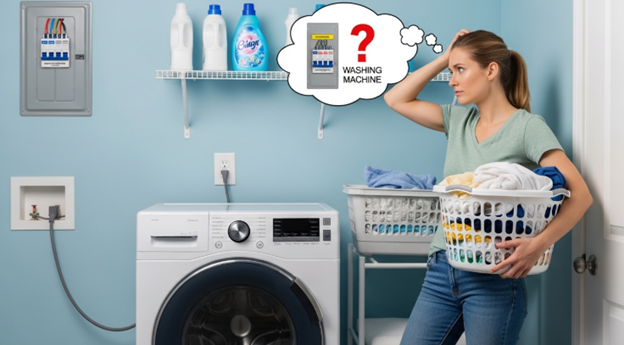
If you’ve ever wondered, does a washing machine need a dedicated circuit, you’re not alone. Many homeowners assume they can simply plug their washer into an existing outlet and call it a day. However, the truth is more complex and potentially dangerous if overlooked.
Modern washing machines draw a significant amount of power, and running them on a shared circuit can cause nuisance breaker trips, appliance damage, and even fire hazards. From decades of hands-on experience, professional electricians at AB Electric Wiring know that a dedicated circuit is often the safest, most reliable solution for any home laundry setup.
In this guide, we’ll explain why a dedicated washing machine circuit is critical, share real-life scenarios, and provide a step-by-step approach for safe installation, all grounded in National Electrical Code (NEC) compliance.
Short Answer (Immediate, Direct Response)
Yes, most modern washing machines require a dedicated circuit.
- Safety First: A dedicated circuit prevents overload and reduces fire risk.
- NEC Compliance: The National Electrical Code specifies dedicated circuits for major appliances in many cases.
- Professional Perspective: Shared circuits can trip frequently and cause hidden damage, something every licensed electrician encounters on the job.
Running a washer on a shared circuit might work temporarily, but it is not recommended for long-term use or high-capacity machines.
Why a Dedicated Circuit Matters for Washing Machines
What Is a Dedicated Circuit?
A dedicated circuit is an electrical line that serves only one appliance. Unlike shared circuits, which distribute power among multiple outlets and devices, a dedicated line isolates the load, ensuring consistent power delivery.
Key points:
- Shared circuits: Power multiple outlets, higher risk of overloading.
- Dedicated circuits: Serve only the washing machine, minimizing breaker trips and fire hazards.
- Load calculations: Proper amperage and voltage ensure the washing machine receives adequate power without stressing the wiring.
Electrical Risks of Using a Shared Circuit
Using a washing machine on a shared circuit can result in:
- Overloading branch circuits, drawing too much current for one line
- Frequent breaker trips or blown fuses
- Fire hazards from overheated wires
- Appliance damage and potential warranty voids
Even a seemingly minor overcurrent can compromise wiring integrity over time.
How Washing Machines Draw Power
Understanding Washing Machine Electrical Requirements
Most standard washing machines require:
- Amperage: 10–15 amps for standard units; 20A for high-capacity or commercial-style washers
- Voltage: 120V household power; some larger units may require 240V
- Load type: Continuous during cycles with periodic surges during motor start-up
- NEC guidelines: Laundry room circuits should comply with code, often recommending dedicated circuits
Real Electrician Experience
During a recent home remodel, a client’s washing machine shared a 15A circuit with a dryer and nearby outlets. The results were predictable:
- Frequent breaker trips during wash cycles
- Flickering lights in the laundry area
- Nuisance GFCI tripping
The solution: install a dedicated 20A circuit for the washing machine, proper grounding, and GFCI compliance. The outcome: smooth operation, no trips, and complete code compliance.
This real-world scenario demonstrates why a dedicated circuit is not just a recommendation — it’s a practical necessity.
Installing a Dedicated Washing Machine Circuit
Step 1: Inspect Existing Wiring
- Check your main panel capacity
- Identify nearby shared circuits and outlets
- Determine if new breaker and wiring are needed
Step 2: Determine Circuit Size
- Standard washing machine: 15A
- High-capacity/commercial: 20A
Step 3: Run the Circuit
- Use correct wire gauge: 14 AWG for 15A, 12 AWG for 20A
- Route wiring from the panel to the laundry location carefully, avoiding obstructions
Step 4: Install Breaker & Outlet/Hardwired Connection
- Decide between plug-in or hardwired washing machine
- Install dedicated breaker with proper labeling
- Ensure grounding and NEC compliance
Step 5: Test and Inspect
- Check voltage and amperage under load
- Observe a full cycle to confirm proper operation
- Professional inspection is recommended for safety and compliance
Dedicated vs Shared Washing Machine Circuit
| Factor | Dedicated Circuit | Shared Circuit |
| Safety | High | Lower |
| Fire Risk | Minimal | Higher |
| Circuit Overload | Rare | Common |
| Appliance Longevity | Longer | Shorter |
| NEC Compliance | Yes | Often No |
| Convenience | Maximum | Frequent trips possible |
Sub-Questions People Also Ask
- Can a washing machine share a circuit with a dryer?
- Is a 15A circuit enough for a washing machine?
- Can older homes support a washing machine without dedicated circuits?
- What happens if a washing machine is on a shared circuit?
- How much does installing a dedicated washing machine circuit cost?
- Should a GFCI breaker be installed for washing machines?
- Can a washing machine be hardwired safely?
Signs Your Washing Machine Circuit Is Unsafe
- Frequent breaker trips during wash cycles
- Flickering lights or tripped outlets in laundry area
- Warm or discolored outlets
- Reduced appliance performance
- Nuisance GFCI/AFCI tripping
Pros and Cons of a Dedicated Washing Machine Circuit
Pros
- Maximum safety and NEC compliance
- Prevents nuisance breaker trips
- Extends appliance lifespan
- Protects other circuits from overload
Cons
- Slightly higher installation cost
- Requires panel space and professional wiring
FAQs
- Does a washing machine need a dedicated circuit?
Yes, most modern washing machines require a dedicated 15–20A circuit to ensure safety, proper function, and NEC compliance. - Can I plug a washing machine into a shared outlet with a dryer?
- What gauge wire is needed for a washing machine circuit?
- Is a GFCI breaker required for a washing machine?
- How much does installing a dedicated washing machine circuit cost?
- Can older homes support a washing machine without a dedicated circuit?
- What happens if a washing machine trips a shared circuit repeatedly?
- Can a washing machine be hardwired safely instead of using a plug-in?
Final Verdict: Should a Washing Machine Have a Dedicated Circuit?
Yes. Installing a dedicated circuit for your washing machine is essential for safety, appliance longevity, and NEC compliance. Shared circuits are one of the most common causes of breaker trips, appliance stress, and hidden fire hazards in laundry rooms.
Electrician Perspective:
“From years of fieldwork, washing machines on shared circuits are one of the most common causes of laundry area breaker trips. Installing a dedicated circuit ensures safety, proper function, and peace of mind exactly what a professional electrician would recommend.”