
Why Install an EV Charger at Home?
Installing an EV charger at home is the most convenient and cost-effective way to power your electric vehicle. Instead of searching for public charging stations, you can simply plug in your car overnight and wake up with a full battery every morning.
Understanding EV Charging Levels
Before starting your installation, it is important to understand the different charging levels available for residential use.
Level 1 (Basic Charging)
This uses a standard 120V household outlet. While it requires no special installation, it is very slow and can take over 20 hours to fully charge a battery.
Level 2 (Fast Charging – Recommended)
This requires a 240V circuit, similar to what is used for a large appliance like a clothes dryer. Level 2 chargers are 3 to 7 times faster than Level 1, making them the best choice for daily use.
Level 3 (DC Fast Charging)
These are extremely powerful chargers found at commercial stations and are generally not compatible with home electrical systems.
Key Requirements for Installation
To install a Level 2 charger safely, your home must meet specific electrical requirements.
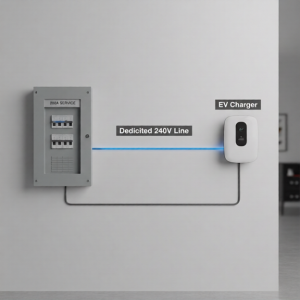
Dedicated 240V Circuit
The charger must have its own dedicated circuit to prevent overloading other parts of your home.
Electrical Panel Capacity
Your breaker panel must have enough room to handle an additional 40 to 60 amps of power.
Local Permits
In areas like New York City, professional installation requires electrical permits and inspections to ensure the work meets city safety codes.
Common Installation Challenges
Electrical Panel Upgrades
If your home has an older electrical panel, it may not have enough capacity to support a fast charger, requiring a panel upgrade first.
Wiring Distance
The further your garage or driveway is from the electrical panel, the more complex and expensive the wiring process becomes.
Outdoor Considerations
If you do not have a garage, you will need weather-resistant equipment and specialized mounting to protect the charger from the elements.
How Much Does Home EV Charger Installation Cost?
The total cost of installation depends on your home’s existing electrical setup and the type of charger you choose.
Charger equipment usually costs between $400 and $800.
Labor and installation in areas like NYC typically range from $1,000 to $2,500.
Panel upgrades, if needed, can add $1,500 to $4,000 to the total project cost.
Why You Should Hire a Licensed Electrician
Installing an EV charger involves high-voltage electricity and significant power loads. DIY installation is dangerous and not recommended for several reasons.
Fire Safety
Improper wiring can lead to overheated circuits, electrical fires, or damage to your vehicle’s battery.
Code Compliance
A licensed electrician ensures the installation follows all National Electrical Codes and local regulations.
Insurance and Warranty
Many vehicle and charger manufacturers require professional installation to keep your warranties valid.
Conclusion
Investing in a home EV charger is a smart move that increases the value of your property and provides long-term savings. To ensure your home is powered safely and efficiently, always consult with a licensed electrician for a professional installation.