
When faced with electrical issues, the immediate instinct is to look for the lowest price tag. However, in the world of home electricity, “cheap” can quickly become “dangerous.” While repairing a specific outlet or switch is less expensive in the short term, replacing old, deteriorating wiring is often the more cost-effective choice for the long-term health and value of your home.
When Repairing Makes Sense (The Short-Term Fix)
Repairing involves fixing specific, isolated problems without changing the entire system. This is generally cheaper up-front and is suitable if your home’s overall wiring is modern and in good condition.
- Typical Costs: A simple repair, such as replacing a burnt-out outlet or tightening a loose connection, usually costs between $150 and $400 depending on labor rates.
- When to choose it: Use this option if the damage is localized (e.g., a wire was accidentally cut during a renovation) or if your wiring is less than 20 years old and mostly functional.
When Replacing is Necessary (The Long-Term Investment)
Replacing (rewiring) involves removing old, outdated cables and installing modern, grounded wiring throughout the house.
- Typical Costs: A full house rewire is a major project, often ranging from $10,000 to $30,000 depending on the size of the home and local labor rates.
- When to choose it: Replacement is required if your home uses Knob-and-Tube or Aluminum wiring, if the insulation is crumbling, or if you lack a proper grounding system (two-prong outlets).
The Hidden Costs of Constant Repairs
Choosing to “patch” an old system repeatedly can actually cost you more over time.
- Service Call Fees: Every time an electrician comes out for a minor repair, you pay a minimum service fee (often $100–$200). Five small repairs can easily equal the cost of a significant upgrade.
- Home Insurance Premiums: Many insurance companies charge higher premiums—or may refuse to cover you entirely—if your home has outdated wiring like Knob-and-Tube. Replacing the wiring can lower your insurance costs by 10% to 20%.
- Property Value: A home with a “certified rewire” has a much higher resale value. Buyers are often scared off by old wiring, leading to lower offers or demands for expensive credits during the closing process.
Comparison: Repair vs. Replace
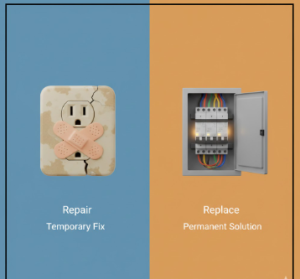
| Feature | Electrical Repair | Full Rewire (Replace) |
| Upfront Cost | Low ($150 – $500) | High ($10,000 – $30,000) |
| Duration | 1–3 Hours | 5–10 Days |
| Safety Level | Fixes immediate symptom | Removes the root cause/fire risk |
| Property Value | No Change | Increases significantly |
| Compliance | Might not meet current code | Brings home to 100% current code |
The Safety Gap
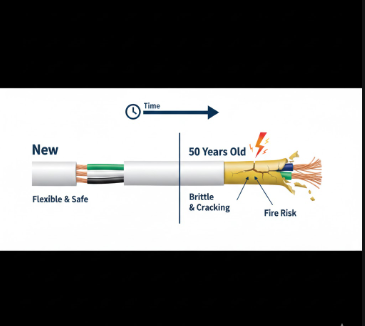
The biggest reason replacement is often “cheaper” is the cost of failure. An electrical fire can cost hundreds of thousands of dollars in property damage and loss of life. Old wiring insulation wasn’t designed to last forever; after 50 years, it becomes brittle and can spark (arc) inside your walls. A full replacement removes this risk entirely by installing AFCI and GFCI protection that old systems cannot support.
Conclusion
If your home is over 40 years old and you are experiencing frequent issues, the “cheap” repair is likely just a band-aid on a bigger problem. While the initial cost of a rewire is high, it pays for itself through lower insurance, higher home value, and most importantly, the prevention of a devastating fire. When it comes to electricity, investing in a permanent replacement is always the smartest financial and safety decision.