
Introduction
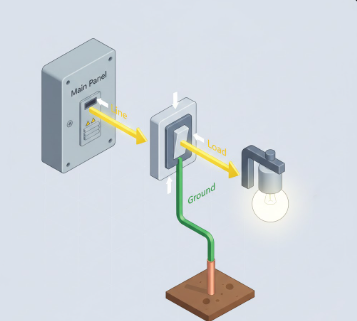
When working with home electrical systems, three common terms often appear: Line, Load, and Ground. These wires play different roles, and understanding their purpose is important for safety and proper installation. Mixing them up can lead to electrical faults, damaged appliances, or serious safety hazards.
What Is a Line Wire?
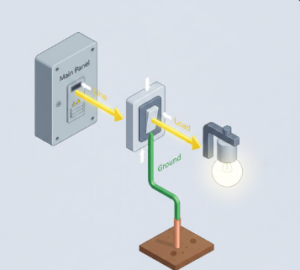
The Line wire is the wire that brings power from the main electrical panel into a switch, outlet, or device. It is the main source of electricity in a circuit. This wire usually remains live, meaning it can carry current even when the device is turned off. In simple terms, the Line wire is the incoming power.
What Is a Load Wire?
The Load wire carries electricity away from the device to whatever is being powered, such as lights, outlets, or appliances. It only becomes active when the device is switched on. In simple terms, the Load wire is the outgoing power.
What Is a Ground Wire?
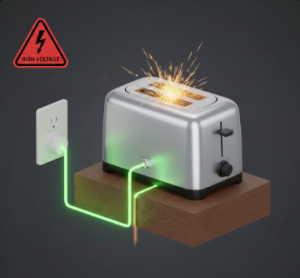
The Ground wire is a safety wire. It does not normally carry electricity during normal operation. Instead, it provides a safe path for electricity to travel in case of a fault, such as a short circuit or damaged wiring. The Ground wire protects people from electric shocks and helps prevent electrical fires.
Why These Wires Are Important
Each wire has a specific job:
- The Line wire supplies power.
- The Load wire delivers power to devices.
- The Ground wire protects against danger.
If these wires are connected incorrectly, electrical systems may not work properly, and safety risks increase significantly.
Common Wire Colors
Although colors can vary, most homes follow general standards in the United States:
- Line and Load wires are usually black or red.
- Ground wire is usually green or bare copper.
- Neutral wire (which is different from Ground) is usually white.
Note: Color alone should never be trusted. Proper testing is always required before touching any wires.
Where You Commonly See These Wires
These wires are found in many places, including:
- Light switches and smart switches.
- Standard electrical outlets.
- GFCI outlets, which require correct Line and Load connections to function safely.
- Main electrical panels.
Common Mistakes Homeowners Make
Many people incorrectly assume that:
- Black wire is always Line.
- White wire is always Neutral.
- Green (Ground) wire is optional.
These assumptions can be dangerous. Wiring setups differ, and incorrect connections can cause shock risks, device failure, or fire hazards.
When to Call an Electrician
You should contact a licensed electrician if:
- You are unsure about wire identification.
- You are installing new switches or outlets.
- Breakers trip immediately after installation.
- You notice burning smells or sparks.
Professional electricians use specialized testing tools to identify wires safely without guesswork.
Conclusion
Understanding the difference between Line, Load, and Ground wires is essential for electrical safety. Each wire has a specific role that keeps your home powered and protected. While basic knowledge is helpful, electrical work should always be handled carefully. When in doubt, professional assistance is the safest option.