
When you flip a light switch, you expect it to work without a second thought. However, if you touch that switch and feel warmth or heat, it is a sign that electricity is meeting resistance. In the world of electrical safety, resistance creates heat, and too much heat can lead to melting plastic, damaged wiring, and house fires.
Common Reasons for a Warm Light Switch
There are three primary reasons why a light switch might feel warm. Some are harmless, while others require immediate professional attention.
1. You Are Using a Dimmer Switch
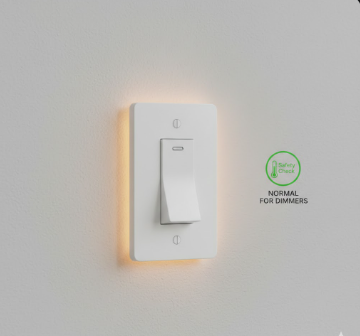
This is the most common reason for a warm switch and is often perfectly normal. Dimmer switches work by dissipating a portion of the electrical energy as heat to reduce the brightness of the bulbs.
Is it safe?
A dimmer switch may feel slightly warm to the touch (up to around 195°F is often within the safety limit for internal components), but it should never feel hot or have a burning smell.
Overloading
If you have too many high-wattage bulbs connected to one dimmer, it will exceed its wattage rating and become dangerously hot.
2. Overloaded Switch
Every switch has a specific amp rating (usually 15 or 20 amps). If the switch is controlling too many lights or a high-powered appliance that draws more current than the switch is rated for, the internal components will overheat.
The risk
Constant overloading degrades the internal spring mechanism of the switch, eventually leading to failure or a fire.
3. Loose or Damaged Wiring (The Most Dangerous Cause)
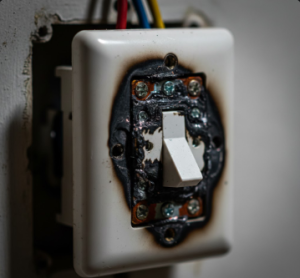
The most serious cause of a warm switch is loose wiring. If the wires connected to the switch are not tightened properly, or if the wires inside the wall have become frayed, electricity will arc across the gap.
The danger
Arcing creates intense, localized heat that can melt the switch’s plastic housing and ignite the wooden studs or insulation inside your walls.
Warning Signs That Accompany the Heat
If your switch is warm and you notice any of these symptoms, turn off the circuit breaker immediately.
Flickering lights
Buzzing or popping sounds
Discoloration or melted plastic
A fishy or metallic odor
These are classic signs of active electrical damage.
How to Solve the Problem
Step 1: Check the Bulbs
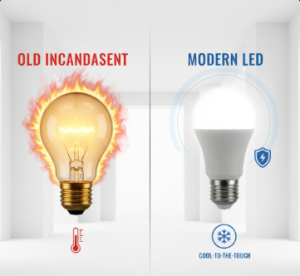
Ensure the total wattage of the bulbs does not exceed the rating of the switch. Switching from old incandescent bulbs to LEDs can dramatically reduce heat.
Step 2: Inspect the Connections
A licensed electrician can check for loose or back-stabbed wires, which are notorious for overheating.
Step 3: Replace the Switch
Light switches wear out over time. Replacing an old or cheap switch with a new quality one is one of the easiest safety upgrades you can make.
Conclusion
A warm light switch is a warning sign that something in your electrical system is under stress. While dimmer switches can be slightly warm, a standard switch should never be. Ignoring heat can lead to electrical fires, damaged wiring, and serious safety risks. If your switch feels hot, smells strange, or makes noise, the safest move is to shut off the power and call a licensed electrician for inspection.